On 7 August 2026 we rebuilt our model catalog against the provider's price sheet, and the capture (dated 8 August, UTC) carries three stories at once: Seedance 2.5 became callable, two Seedance variants quietly dropped to promo rates, and two models that were already in the lineup changed price without an announcement. Every figure below is from that capture and from the shootout run we paid for on 5 August — nothing here is quoted from a press release, and nothing needed a new paid run to verify.
What you get on Seedance 2.5 — and what you don't
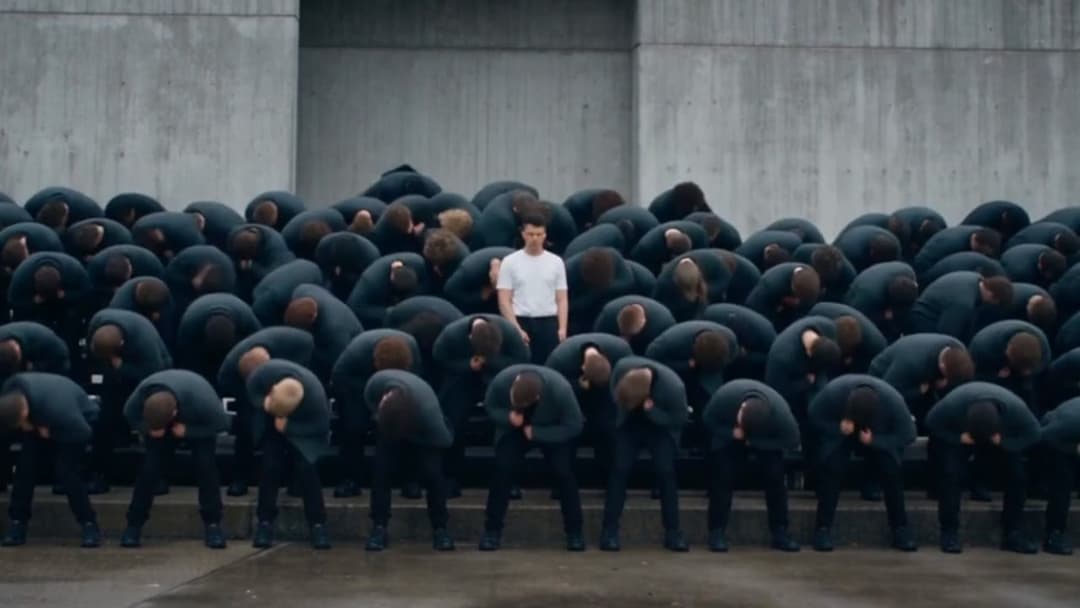
The new generation takes reference images, reference video and reference audio, speaks with native audio, and — this is the part the launch posts skip — tops out at 720p. The 2.0 flagship still owns 1080p and 4K. A reference video is capped at 30 seconds — and that feature is what the STORM format runs on: a crowd's choreography borrowed from a reference clip, your own avatar in the middle of it, two steps in the chat.
At our prices, with the platform margin in force since 5 August included, a 15-second 720p part costs $5.67 on Seedance 2.5 against $3.69 on Seedance 2.0 — about 54% more per second for a model that serves half the resolutions. At 480p the same 15 seconds are $2.52.
That is not a reason to ignore it. In our five-model shootout the 2.0 flagship was the only model that held a face and a packaging label in the same clip — and it still needed retries. 2.5 exists for exactly those retries: when the flagship drops your label at 720p, the dearer generation is now one dropdown away instead of being a "coming soon" card. Its ceiling draws the line: a 1080p or 4K deliverable rules 2.5 out before price enters the question.
The lineup after the August repricing
15 seconds of motion, one 720p part
- newSeedance 2.5 · 720pNewest generation — native audio, image/video/audio references. Tops out at 720p.720p · 15s$5.67
- flagshipSeedance 2.0 · 720pThe 4K flagship, and the model our shootout actually shipped on.720p · 15s$3.69
- promo → 07.09Seedance 2.0 Fast · 720pThe 2.0 quality envelope at lower latency; promo rate ~75% of the base price.720p · 15s$2.23
- promo → 07.09Seedance 2.0 Mini · 720pDrafts, animatics, b-roll fill; promo rate ~40% of the base price.720p · 15s$0.74
- draft laneGrok Imagine · 1080pNot a Seedance — listed because it is the draft lane the shootout iterated on.720p · 15s$0.72
The promo window matters more than the flagship
Until 7 September 2026, 06:00 UTC, two Seedance variants run at promo rates: Mini at about 40% of its base price and Fast at about 75%. In customer terms at 720p with a video reference, Mini went from $0.075 to $0.03 per billed second, Fast from $0.12 to $0.09.
Our own economics from the shootout said the whole decision is the gap between a draft lane and a ship lane — twelve concept drafts on the cheap model, one finished part on the good one. The promo widens that gap: a 15-second Mini draft at 720p is now $0.74, under a fifth of the 2.0 part it is drafting for. If your pipeline runs faceless clips in volume, this month is measurably cheaper than July was.
Two limits worth naming. First, the promo is dated, and the date is the provider's, not ours — after 7 September the catalog refresh will put the base rates back and this article will not pretend otherwise. Second, Mini's motion coherence drops on complex action; it drafts, it does not ship.
The billing trap: a reference is not a discount
Every Seedance-2-family model shows a lower per-second rate when you feed it a reference video. It reads like a discount. It is the opposite: with a video input the rate is charged over the reference length plus the output length.
Concrete case from our price gate's own test suite: an 8-second Mini clip at 720p with a 15-second reference bills 23 seconds — $0.69 at the promo rate, not the $0.24 the naive reading promises. A long reference costs more than the plain tier, not less. Our cost preview prices this correctly because the same catalog file quotes the preview and the charge; if you are calling the API directly, do that arithmetic before the run, not after the invoice.
What the launch wave is selling
We pulled the fifteen most visible Instagram reels for "seedance 2.5" and "seedance" through ScrapeCreators on 8 August 2026 — engagement figures are as scraped that day. They are the context these prices land in.
The same model launched everywhere at once. Higgsfield (33 days of "unlimited", top post at 352,645 views), CapCut (45,758), Artlist ("unlimited for a year", 236,284), OpenArt (a 7-day window), Runway, Luma. Fifteen posts, six platforms — and not one names a per-second price. Every offer in the sample is a bundle gated behind a subscription window.
The engagement is the funnel, not the model. The top post carries 8,582 comments against 21,419 likes — a comment-to-DM gate ("comment SEEDANCE to get the link") doing what it was built to do. Read those counts as advertising reach, not as verdicts on output quality.
The claims age differently next to a price sheet. "30-second single pass" is real — it is the generation cap we price above. "Up to 50 references" is gateway packaging: the API path we run takes reference images and caps a reference video at 30 seconds. "Region-level editing" belongs to the editors wrapping the model, not to the generation call you pay for.
The one hands-on post says what the promos skip. A video-to-video test on Luma (8,693 views) puts it in four words: "Still at 720p." Our capture agrees — the ceiling did not move for launch week.
None of this makes the model worse. It means the loudest numbers around it this week are subscription funnels, and the quiet ones — rate, cap, billing basis — are the ones a production budget runs on.
We gave the claim one paid attempt
Words are cheap, so on 8 August we gave Seedance 2.5 exactly one try at the wave's central promise: a continuous 30-second take at 720p, 9:16, native audio on, with our standard references — the presenter frame and the product photo from the shootout. One generation, no retries, no editing — published as delivered, with the one pass every part we ship gets: the native speech converted to the presenter's cloned voice (speech-to-speech, timing preserved; the take itself is untouched). The attempt cost $11.34 at our prices.
The 30-second claim, run once0:30 · 720p
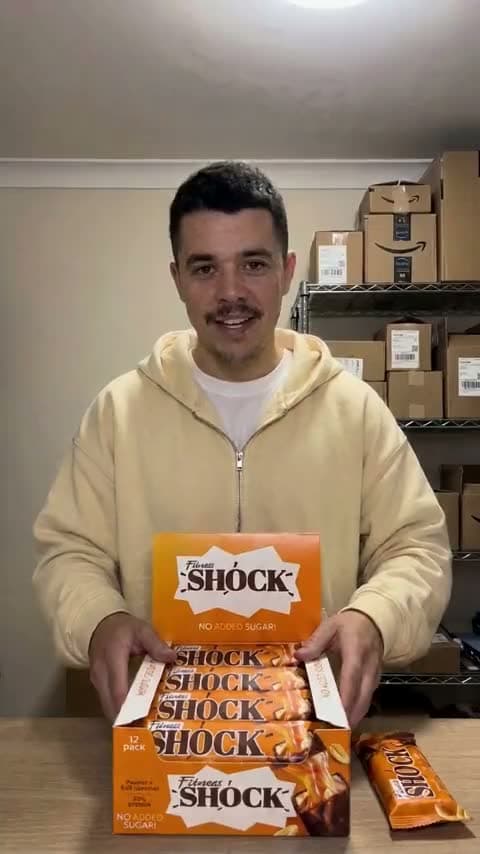
What held, measured on the file rather than felt. The clip runs 30.1 seconds and a scene-change detector finds zero hard cuts. The face is the same person in every frame we sampled. The front-of-pack copy — the brand mark, "12 pack", "Peanut + salt caramel", "20% protein" — is still readable in the final second, which is the axis four of five models failed in our July shootout at half this length. The unwrap-and-bite beat lands with a visible bite mark, and the three scripted lines come back in order.
What did not hold. The fine print: side panels and the inner flap carry mirrored pseudo-text where real packaging carries ingredients. Diction: transcribing the model's native track, two spoken words come back smeared — "readable" arrives as "reddable"; after the voice pass one of them recovers, the other still wobbles. The claim that survives is narrower than the promos and real: thirty seconds, one identity, hero copy intact; small type and crisp diction still wobble.
One accidental finding is worth the section on its own. Our prompt mis-described the presenter, and the model followed the reference images over the words. For identity pinning that is the right direction of failure — the picture outranks the prose.
Two repricings nobody announced
The capture also caught price moves on models that were already load-bearing:
- Grok Imagine video went up 50% on 3 August. A 15-second 720p draft moved from $0.27 to $0.41 at customer prices. It is still the cheapest per-second lane we run, and still the draft lane the shootout iterated on — but July's arithmetic about it is stale.
- Nano-banana-pro tripled. The identity-preserving starting frame that billed about $0.04 flat now bills $0.11 at 1K/2K and $0.14 at 4K. Our per-part economics quote it at $0.11, and every identity card built from it inherits the new number.
Neither change came with an announcement post. Both walked in through a price sheet refresh — which is the argument for regenerating your price table from the provider's data instead of remembering it.
The quiet image news: Qwen 3 and layer splitting
Two image entries in the same drop are worth a paragraph each.
Qwen Image 3.0 renders a still for about $0.03 — and 2K costs the same as 1K, which no other model in our catalog does. Its selling point is legible text and layout: packaging copy, posters, UI mocks, in Latin or CJK. For product frames the model has never seen, it is the cheapest path to a readable label. The Pro pair runs $0.04–0.07 for hero frames.
Seedream 5 Pro layer decomposition splits a finished frame into editable layers — background, foreground, text blocks — at about $0.04 per output layer (1–1.5K; $0.08 at 2K). Watch the unit, though: every extracted layer bills as one image, so a four-layer split of one frame lands near $0.17 — four ordinary edits' worth for a single source frame. Use it when you need the layers, not as a fancier edit button.
What this drop cost us to price correctly
A price sheet update sounds like data entry. Three things in this one were paid for in engineering time, and each is a way your own bill can silently drift:
A three-cent editor briefly advertised itself at a third of a cent. The provider writes Qwen 3's reference-image surcharge in the same text format as a real tariff, and our parser initially read the $0.003-per-reference line as the model's price — which would have sorted a $0.03 editor as the cheapest still model in the guide and, one step later, made it a default. A guard test that re-sorts the guide caught it: the fix keys on which side of the ledger a rate bills, not on the label's wording.
Layer decomposition nearly inherited its sibling's prices. The layer rows carry no anchor link in the provider's sheet, so they match by label — and until the matcher preferred label rows over card-level fallbacks, the new submodel quoted the ordinary edit tariff. The check that survives: after every refresh, diff every model's tiers against the previous capture and explain each change.
"Condition not stated" now prices as the dearer tier. When a call does not pin a resolution, the estimate takes the most expensive published tier rather than guessing low. A preview that guesses low is not a preview; it is an invoice with better marketing.
So which is the cheapest AI video generator to ship on?
Our answer, priced per finished 15-second part, margin included:
| Item | Ship it (Seedance 2.5) | Ship it (Seedance 2.0) | Draft it (Mini promo) |
|---|---|---|---|
| Starting frame (nano-banana) | $0.11 | $0.11 | $0.11 |
| Video, 15s at 720p | $5.67 | $3.69 | $0.74 |
| Voice (ElevenLabs STS) | $0.08 | $0.08 | $0.08 |
| Total per part | $5.86 | $3.88 | $0.93 |
Keep shipping on 2.0 — it is still the model that held the label when four others dropped it, and it still serves 1080p and 4K, which 2.5 does not. Reach for seedance 2.5 on the specific shots where the flagship fails at 720p and a retry budget of $5.86 per part is cheaper than not shipping. Draft on Mini while the promo lasts, and re-check the math after 7 September — we will, because the catalog rebuild is scheduled, not remembered.
This is the lineup our agent prices before every run — the preview and the charge come from the same file, so the number you approve is the number you pay. Plans and included credits are on the pricing page.