Every shot list template agrees on five columns: shot number, timing, what is in frame, what is said, and a note. Copy any of them and you will produce a document a crew can follow.
Then somebody adds a thumbnail to each row — generated, because generating one costs two and a half credits and takes ninety seconds — and the document quietly stops being true. On 3 September 2026 we generated storyboard stills for two products on production. On both, independently, the model invented the label.
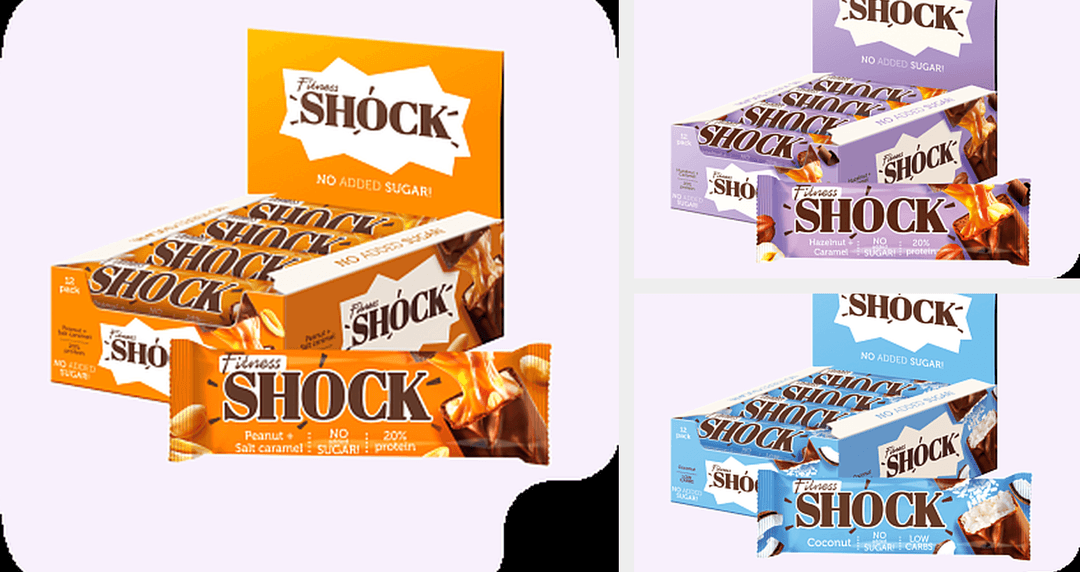
One frame carried a nutrition panel reading 240 kcal and 20 g of protein against a product card that says 183 and 10, and a line reading "Includes 4g Added Sugars" on a product whose entire claim is that it has none. The other carried an ingredient list with date syrup and puffed rice on a bar whose whole proposition is that dates are the only sweetener. The same run also printed "12 × 50g bars" on a box of twelve 40-gram bars.
Nobody had done anything wrong. The prompt described the scene accurately. The model had never seen the box, so it drew a plausible one — and the creator holding that shot list shoots the label in the picture, not the label on the box.
Attach the real product photo to every row. It costs nothing and it is the difference between a reference and a guess. Start free, or see what a run costs first.
The template
Six columns. The first five are the ones you already know.
| Column | What goes in it | Why it is there |
|---|---|---|
| Scene | S1 … S5 | The order the shoot runs in |
| Timing | 0:04 – 0:12 | Budgets the cut before anyone films it |
| Frame | What the camera sees | The shot, not the idea of the shot |
| Line | What is said, word for word | Compliance lives in words, not in vibes |
| Must / Must not | What has to appear, what never may | Each traces to a numbered brief item |
| Reference | A photograph of the real product | Decides whether any of the above is true |
The limit: six columns is a document, not a process. It tells a creator what to shoot and tells nobody whether what came back is acceptable — that is what the acceptance criteria in the brief are for.
Why the fifth column needs the sixth
The must / must-not pair is the column that carries legal weight. "Do not name a competitor." "The label must be legible in at least one shot." "Read the six ingredients exactly as printed."
Now put a generated thumbnail next to that last one showing eight ingredients, two of which are wrong. The row now contradicts itself, and the half a creator believes is the picture. Text is what a lawyer reads; a photograph is what a person shoots.
This is why the sixth column is not a nice-to-have. Everything the first five columns promise is unenforceable next to a picture that disagrees with them.
The limit: a reference photograph fixes the packaging, not the scene. It will not stop a model from putting the bar on a marble counter you do not own.
What it costs
Prices are what a customer pays, at 1 credit = $0.01 as of 3 September 2026.
| Step | Price | Time | Measured |
|---|---|---|---|
| One storyboard still | 2.5 credits ($0.025) | ~90 s | two briefs, 3 Sept 2026 |
| Five stills, one per scene | 12.5 credits ($0.125) | 7 min 13 s and 6 min 55 s | the same two runs |
| The reel the stills feed | 179 credits ($1.79) | ~9 min | production estimate |
The last row is where the shot list stops being paperwork. Before the stills existed, the reel estimated at 210 credits. After they existed, 179 — the 31-credit difference is exactly the frame-generation line the renderer no longer has to pay, because the frames already exist and it starts each beat from them.
A shot list that feeds the render is cheaper than one that does not, by the price of the shot list.
The limit: that only holds when the stills are the ones you approved. Regenerate them and you are paying twice for the same 31 credits.
What we got wrong
We drew from words on the first run. Two products, both labels invented, $0.25 spent to find out. The fix ships the packaging photographs into the generation as references and costs exactly the same per still — the reference- capable model is the same price as the text-only one. Cost: $0.25 and one release.
We overwrote the evidence. The redraw wrote the corrected stills to the same file paths as the wrong ones, so the before-and-after pair no longer exists as images. What survives is the text, quoted above. Cost: a figure this article cannot show you.
We assumed a missing photo meant "draw it anyway". It now means the opposite: with no packaging photograph on the product card, the still deliberately keeps the label unreadable — out of focus, angled away, out of frame. A legible invented label is worse than an unreadable real one. Cost: nothing, because we caught it while fixing the first mistake.
A shot list template for a TikTok Shop product video
For a TikTok Shop listing the shot list carries one job the film version does not: proving the thing in the video is the thing in the listing. Three rows do most of that work — the pack front legible, the product handled unwrapped on camera, and the label read out loud in the same shot it is visible in.
Each of those rows needs the sixth column more than the others, because each is the one a buyer will compare against your product photos. If the storyboard shows a package that is nearly yours, the comparison is what fails, not the video.
What renders it afterwards is a separate question — which model, and what it costs — and the answer does not change the shot list.